How a restump is priced
Per stump, then adjusted. The builder counts the stumps during the inspection, puts a rate on each that reflects the stump type, the depth and the ground, adds the relevelling, adds whatever permit or surveyor fees apply on that side of the river, and sets a rate for any bearer and joist timber found once the baseboards come off. This page does not quote a figure, because two houses the same size can be a long way apart and because this site does not do the work. What it does is list the things that move the number, so a quote can be read instead of just received. The one thing nobody else on the border explains is the last row of the table: which side of the river the house is on changes the paperwork inside the price.
What moves the price
| Factor | Why it matters on the border |
|---|---|
| Number of stumps | A weatherboard cottage on a close bearer grid can have far more stumps than a later house on wider bearers. The count sets the base, and only an inspection produces it. |
| Access under the house | A subfloor with a few hundred millimetres of clearance is dug lying down with a short shovel; one with room to kneel is a different day. Low clearance under the 1870s to 1890s cottages of South Albury and some 1950s to 1970s Lavington houses is the single most common reason two similar homes are priced apart. |
| The clay and the season | Border clay is hard in late summer and wet in winter. The two Wodonga estate soil reports we have seen call for stumps at least 500 to 600 mm below the surface on those lots; a hole to that depth in dry Class M clay is slow digging, and the same hole in July may need pumping. Depth is set by the surveyor, the engineer or the builder from the ground, not from this page. |
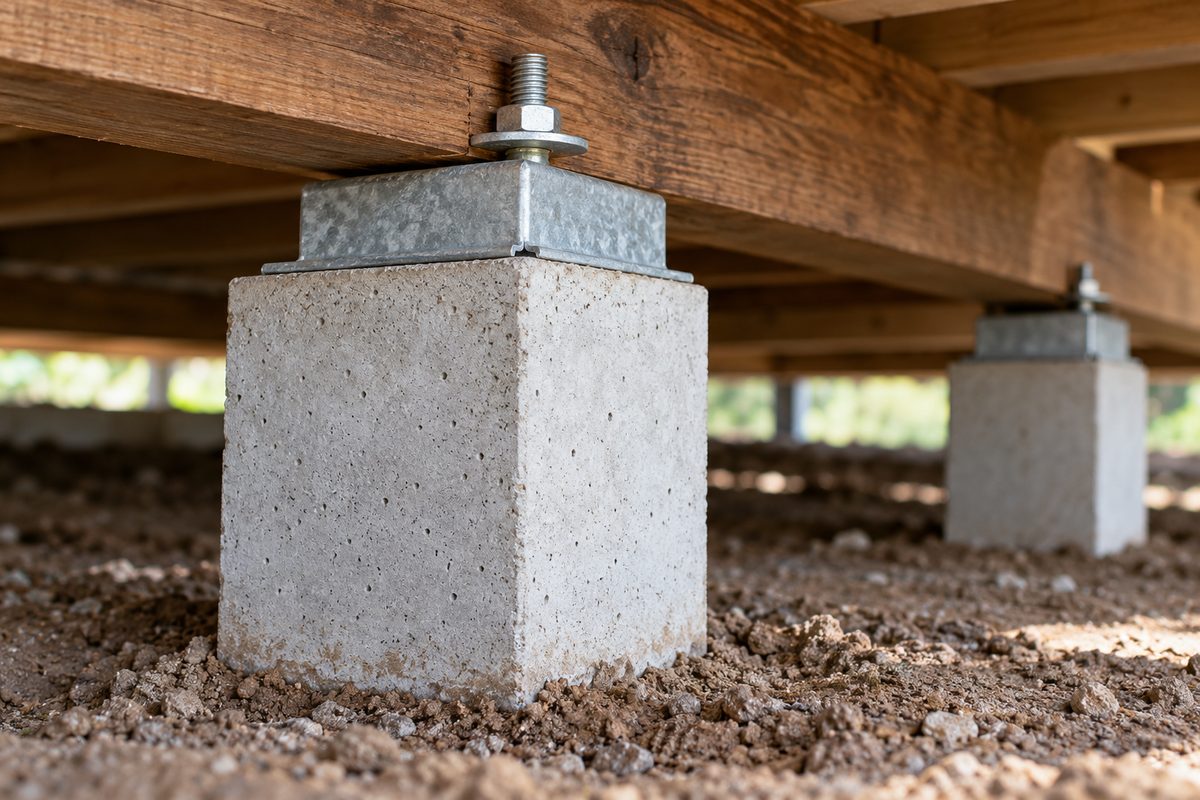
| Steel or concrete | Precast concrete is the usual choice. Galvanised adjustable steel is priced separately per stump, needs a pad under it, and can be relevelled later with a spanner, which on a corner that keeps moving is worth paying for. |
| Bearers and joists | Rotted or termite-eaten timber replaced while the house is on jacks. Not known until the baseboards are off, and often the biggest variable on a damp subfloor. See the subfloor repairs page. |
| Permits and fees: Wodonga side | A building permit from a registered building surveyor, whose fee the surveyor sets, plus a Road Reserve Works Permit for most works. Ask the surveyor for the fee in writing and the council for the current figure. |
| Permits and fees: Albury side | Often none, because restumping without raising the house is an exempt development example. On a heritage item or in a conservation area an application under clause 5.10(3) of the LEP may be needed, and the council sets the fee. |
| Getting spoil and stumps out | A wide side path and a street that takes a truck, or every barrow through a gate on a narrow central Albury block. |
| Drainage and vents | Regrading under the house, new vents, sometimes a drain on the wet side. Small beside the stumps, and the reason the new stumps last. |
| Full or partial | Set-up, permit and relevelling are spread across the stumps done. Replacing ten now and the rest in three years usually costs more than doing them once. |
| Which side of the river | The contract form, the insurance and the registration or licence rules are different in Albury and Wodonga, and each adds to what the builder has to carry inside the price. The thresholds are below. |
What the law adds, and at what value
The thresholds are the only dollar figures on this page, and they come from the two governments rather than from any builder.
Albury (New South Wales). Over $5,000 including GST the contractor needs a NSW contractor licence and a written contract; from $5,000 to $20,000 a small job contract is enough. Over $20,000 the contract has to be the large job form with the 17-item checklist, and the builder must have Home Building Compensation cover of at least $340,000 in place before work starts or any deposit is taken. Penalties for unlicensed work are $22,000 for an individual and $110,000 for a company, which is one reason a licensed quote costs what it does.
Wodonga (Victoria). The builder must be registered with the Building and Plumbing Commission to reblock or restump a home regardless of the value; the general $10,000 registration threshold does not apply to this trade. Over $10,000 the job needs a written major domestic building contract under the Domestic Building Contracts Act 1995. From 1 July 2026 the builder must take out Home Warranty insurance where eligible work costs more than $20,000, and the builder pays the premium; before that date domestic building insurance applied over $16,000, so an older quote may still say so. Owner-builders need a certificate of consent over $16,000.
A quote near $20,000 on either side should say which side of the line it falls on, because the contract form and the cover change at that point in both states. The border page sets the two systems side by side.
What a quote should itemise
- The number of stumps, and whether it is all of them or a listed few by position.
- The stump type: precast concrete, galvanised adjustable steel, or a mix, with pads and ant caps named.
- The depth the holes will go to, or the basis for it: a soil report, the surveyor's requirement, or firm ground found on the day.
- Relevelling: which bearers, to what tolerance, with steel packers.
- Bearers and joists: a rate per metre of bearer and per joist for what is found, agreed before the baseboards come off, with a limit above which the builder rings you.
- Drainage and vents: whether regrading and new vents are in, and whether a drain on the wet side is quoted or excluded.
- Permits and fees: on the Wodonga side, who engages the surveyor and whether the surveyor's fee and the road reserve permit are inside the price; on the Albury side, whether the exempt development route has been checked and whether the house is heritage listed.
- The licence or registration number, to check on the NSW licence verification service or the Commission's practitioner register, and the HBC or Home Warranty cover if the job is over $20,000.
- The contract form: small or large job contract in New South Wales, major domestic building contract in Victoria, and which applies to this price.
Reading two quotes against each other
If one quote is a third cheaper than another for the same house, look for what is missing rather than what is clever. The common gaps: the surveyor's fee is excluded on a Wodonga job, the stumps are timber, the bearers are a vague extra, there is no mention of vents or drainage, the stump count is lower because the inspection was shorter, or the quote was written for the wrong side of the river and carries the wrong contract and the wrong cover. A quote that cannot be compared on the nine lines above is a number, not a quote.
The other thing to compare is what each builder found. Two restumpers under the same house should come out with roughly the same count, and if they do not, ask each one why. One may have probed every stump and the other every third. One may have called the bearers sound from the hatch and the other crawled to the wet corner. The inspection is where the price comes from, and a longer inspection that finds more is not padding the job, it is pricing the job that is there. It is also fair to ask what happens if more rot is found once the baseboards are off: a rate per metre agreed in advance is the answer you want.
The border builder's price
A crew based in Wodonga quoting an Albury house, or the reverse, carries one more cost: being allowed to work there. A Victorian licence holder can work in New South Wales under Automatic Mutual Recognition if the licence covers the work and they notify Building Commission NSW before starting; Victoria offers the reverse to individual practitioners who notify before starting and meet Victorian insurance requirements. Both apply to individuals, not companies. A quote from across the river that is markedly cheaper is worth a question about which register the builder is on for the side your house is on, because the penalties for getting it wrong fall on the builder but the unprotected job falls on you. Check both registers; the border page explains how.
What a cost guide cannot tell you
It cannot give a price for your house, because the number that matters most, the state of the bearers, is behind the baseboards, and because this site does not quote the work. It cannot tell you the surveyor's fee on the Wodonga side, which each surveyor sets, or a council fee on either side, which you should ask the council for. It cannot say whether the dearer quote is the better one; only the nine lines above can. It cannot classify your ground; the two Wodonga estate reports are two lots, and a geotechnical test sets the class and the depth for yours. And it cannot tell you what the clay will do next: a cheap relevel this year and another in three years is dearer than deeper stumps once.
Check the current rules before you rely on this
This page describes what moves the price of restumping on both sides of the border and the contract, licence, registration and insurance thresholds that sit inside a quote. It describes the rules in general terms as they stood in October 2026. Standards, forms, thresholds and fines change.
The authoritative sources are NSW Government, general building work licence, NSW Government, home building contracts, Service NSW, home building compensation cover, Victorian Building Authority, clarification of registration requirements for domestic builders, Consumer Affairs Victoria, preparing a major domestic building contract and Building and Plumbing Commission, domestic building insurance. Where anything here differs from those sources, they are right and we are not.
We are not certifiers, building surveyors, engineers, planners or lawyers. For what applies to your house, ask a licensed builder, a certifier or building surveyor, or your council (City of Wodonga on 02 6022 9300 or Albury City Council).
Accurate at the time of writing, October 2026. Always check the source before relying on it.